

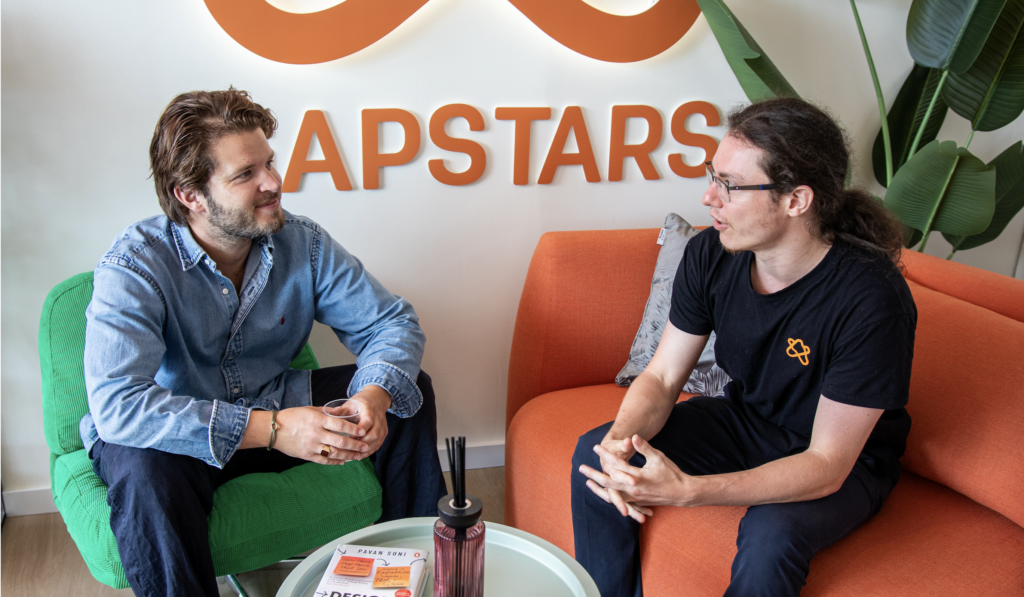
Ask a CTO how their AI rollout is going and you will usually get one of two answers.
The first is the official one. Pilots are progressing. The team is aligned. There is a roadmap. Things are moving in the right direction.
The second, if you catch them at the right moment, sounds quite different. The data is messier than anyone admitted upfront. The board wants results on a timeline that does not remotely reflect how any of this actually works. Half the organisation has not really bought in yet. And the question of who is responsible when something goes wrong has not been answered, which means it is quietly landing with them by default.
The second conversation is where the real substance is.
Not because the first one is dishonest, but because the gap between them is where most of the real work is happening, and it is a gap that does not get nearly enough airtime.
That number is not surprising to anyone who has had the second conversation.
It is, however, striking that it is still this high, this far into the AI era.
The Board Wants a Strategy. The CTO Is Trying to Keep the Lights On.
There is a version of AI transformation that looks clean from the outside. A strategy gets announced. A use case gets selected. A pilot gets launched. Progress gets reported.
What that picture leaves out is everything happening underneath it.
Legacy systems that were never designed to talk to modern AI tools. Data sitting in silos that nobody has had time to clean. Teams that are being asked to adopt new workflows while simultaneously managing the existing ones at full capacity.
The CTO is living in all of that at once, while also being asked to present a roadmap that sounds as confident and compelling as whatever the competition just announced.
What comes up consistently in these conversations is not a lack of ambition or capability. It is a translation problem. The board has read the headlines. They know what AI is supposed to be able to do. What is harder to communicate is the distance between a promising capability and a functioning, scaled deployment inside a specific organisation with its own history, infrastructure, and people.
That distance is where most of the real work lives. And it is rarely the part of the conversation that gets the most airtime.

The Pilot Worked. That Was the Easy Part.
Most AI rollouts follow a familiar pattern. A pilot delivers. The numbers look good. Leadership becomes interested. And then someone asks the question that changes everything: can we roll this out across the business?
One tech company we work with ran an internal AI exercise that exceeded all expectations on engagement. Teams were energised, outputs were promising, and the business case for moving forward felt solid. What the planning phase hadn’t exposed became visible almost immediately once execution began: gaps in the correct frameworks to use, constraints with API access at scale, and a heavier reliance on human oversight than anyone had anticipated. The pilot worked. What it also did was reveal exactly what deploying at scale would actually require.
That pattern is more common than most organisations admit.
Getting from a controlled experiment to something that works at scale is where the real complexity begins.
The gap between a pilot that works and a deployment that sticks is where most of that story lives. The data that powered the pilot was often cleaner and better structured than what exists across the rest of the organisation. The tool that worked well for one team requires significantly more support when it meets teams with different workflows, different levels of comfort, and different incentives.
None of this means the pilot was misleading. It means that a pilot proves a concept, not a deployment. Those are two different things, and organisations that treat them as the same tend to find out the hard way.
The CTOs who navigate this well are usually the ones who are honest about it early.
Who go back to the board after a successful pilot and say: this worked, and here is what it will take to make it work everywhere.
That conversation is harder to have than the one where you announce success. It also tends to produce better outcomes.
Nobody Has Decided Who Owns the Risk.
This is the part of the AI conversation that comes up most quietly and matters most practically.
Most organisations are moving at pace on AI adoption. Tools are being deployed, workflows are being changed, outputs are being trusted. And in the background, the question of who is accountable when something goes wrong remains genuinely unanswered in most places.
In practice, accountability tends to settle on the CTO by default. Not because it was assigned there, but because nobody else claimed it. The problem is that AI decisions cut across legal, compliance, finance, HR, and commercial functions, and the risk does not live solely in the technology. What CTOs will tell you is that unclear ownership does not just create legal exposure. It creates operational paralysis: teams become reluctant to act without cover from above, edge cases get escalated repeatedly, and pace slows not because of technical limitations but because the organisational infrastructure has not kept up with the technology itself.
Governance is not a blocker to AI progress. The absence of governance is.

The Team Is Not Where Anyone Thinks It Is.
Most organisations discover this the same way: not in a strategy meeting, but somewhere between a leadership slide saying “AI-ready workforce” and a very real group chat where half the team is asking what the tool actually does and whether it’s supposed to replace them or help them.
There is a gap in most organisations between how ready leadership believes the workforce is for AI and how ready the workforce actually is. And it runs in both directions. A poll run recently inside a CTO peer community, senior technology leaders across industries rather than junior staff, asked a simple question: has your company laid off people due to AI? 34 out of 43 respondents said no. 7 said yes or were actively considering it. And yet the anxiety inside many of those same organisations tells a different story. The absence of layoffs has not translated into the absence of fear.
A second question from the same group was more revealing still: has your company grown or scaled due to AI? Only 2 said significantly. 16 said slightly. 14 said no. Nobody reported lower costs as the primary outcome. The honest read on that data is that most organisations are spending on AI without yet seeing the returns that justified the investment, and their teams know it.
In almost every organisation right now there are three groups of people. The Energised: a small number who are genuinely experimenting, finding ways to make AI useful, and frustrated that things are not moving faster. The Watchful: a larger group who are aware of it, cautious, and waiting to see how it settles before committing. And the Anxious: a portion carrying real concern about what AI means for their roles and their relevance, and who are not necessarily saying so out loud.
| Significantly | 2 |
| Slightly | 16 |
| No change | 14 |
The Energised A small group genuinely experimenting, finding ways to make AI useful, and frustrated things aren’t moving faster. |
The Watchful The largest group — aware, cautious, waiting to see how it settles before committing. |
The Anxious Carrying real concern about their roles and relevance — and not necessarily saying so out loud. |
The CTO is usually aware of all three groups and trying to bring them along simultaneously. What makes this harder is that the conversation at leadership level tends to assume everyone is somewhere between the first and second group. Strategy gets set, timelines get committed to, and then the gap between expectation and reality becomes the CTO’s problem to manage.
The tools that work intuitively for early adopters often require significantly more support, training, and time for everyone else. That is not a criticism of the people who need more time. It is just true, and it needs to be factored into any honest plan.
What tends to work is treating workforce readiness as a core part of the AI programme rather than a follow-on. Not as a communications exercise or a training module that gets bolted on at the end, but as something that shapes how the rollout is designed from the beginning.
The organisations that do this well tend to move more slowly at first and more sustainably over time.
The CTO Conversation Worth Having
This is not a conversation about slowing down on AI.
The organisations navigating this well are not necessarily the most cautious ones. They are the ones willing to be honest about the gap between where they are and where they want to be, and then design around that reality rather than the slide deck version of it.
What that usually requires is less of the polished boardroom update, and more of the other conversation. The one where the CTO can say: here is what is actually hard about this, here is what we still do not know, and here is what needs to change inside the organisation before any of this works at scale.
That conversation is harder to have. It produces fewer neat headlines and fewer impressive demos.
But the difference between AI that looks successful and AI that actually works is usually one honest conversation that never quite made it onto the agenda.