

The Solution
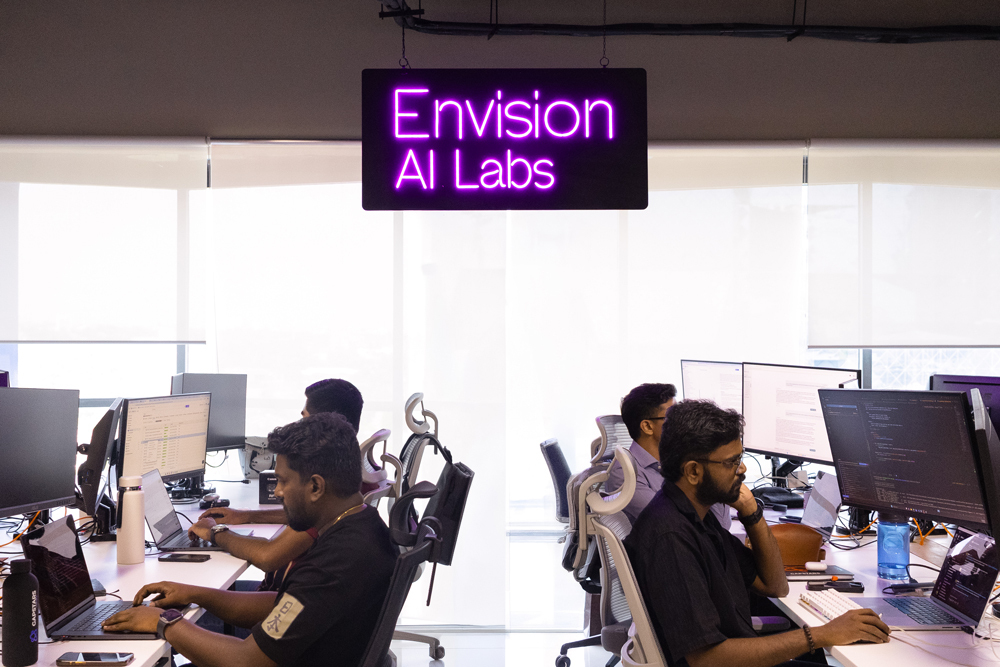
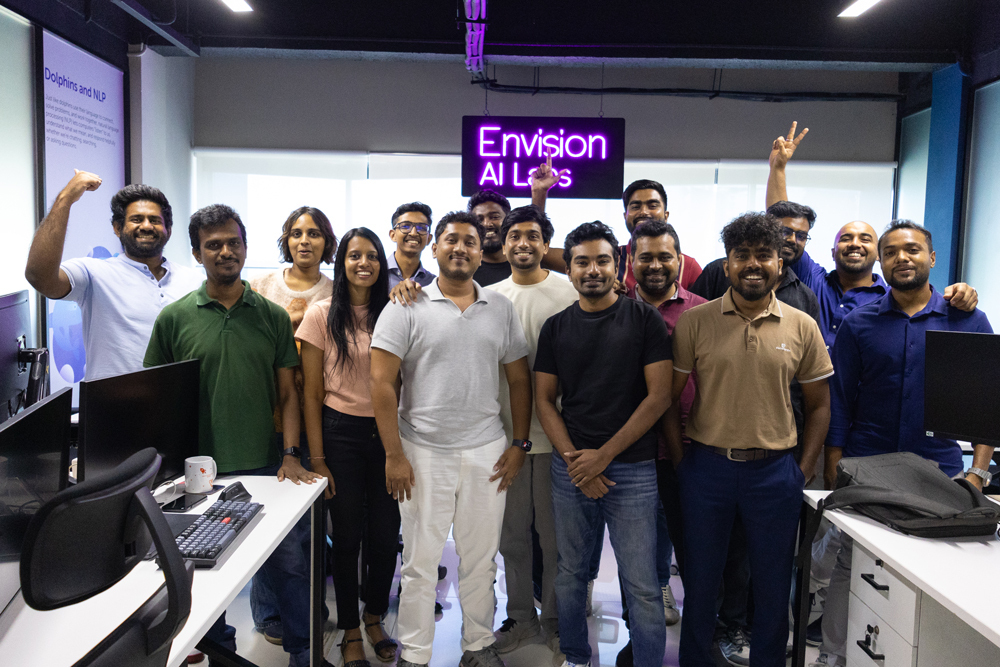
Loodswezen first heard about Gapstars through a referral: a contact who had their own positive partnership experience. Around two and a half years ago, they reached out, and the process began.
Gapstars provided three key things that made the partnership work:
- Precise talent matching: A thorough and structured process to identify, assess, and match the right backend developer — combining technical evaluation with a genuine focus on team fit
- A local hub in Lisbon: A Lisbon-based hub providing operational, HR, and legal support. This removed the complexity of international employment for a Dutch organisation doing this for the first time
- Cross-cultural preparation: Cultural onboarding guidance to help both sides navigate the transition and understand both Portuguese and Dutch working environments
Through Gapstars, Loodswezen hired Ygor, a backend software engineer based in Lisbon, to join the DevOps team as a direct, embedded extension of the group. Not as an external resource, but as a fully integrated team member.
Implementation & Collaboration
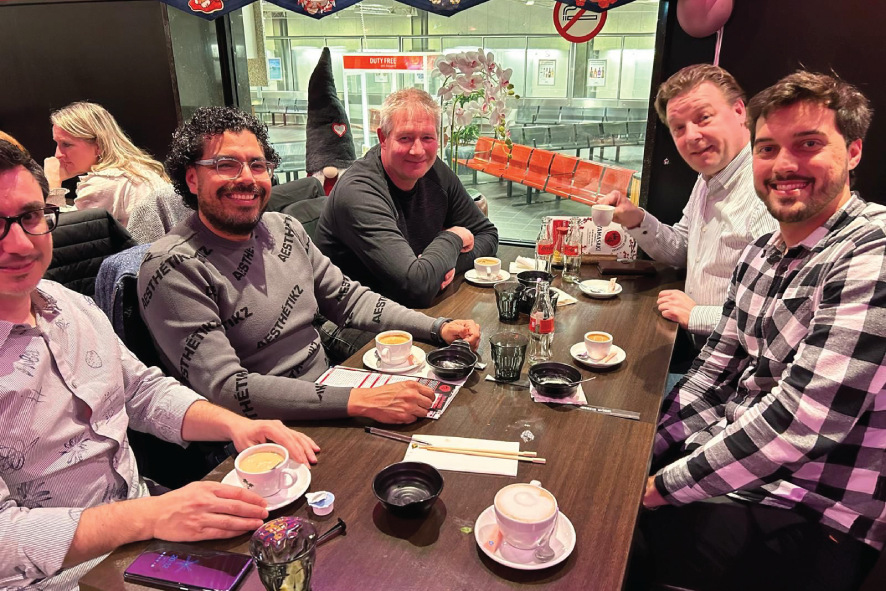
From the very beginning, integration was a major prioritisation. Ygor travelled to the Netherlands when he first joined, spending time not just writing code but getting to know the team in person including time outside of work, sharing meals and conversation with his new colleagues.
“The first time I went there to meet them, I stayed for a whole week. We worked together during the day, and we also had dinner and activities outside of work. It helped build the relationship from the start.” Ygor explains.

The team operates in two-week sprints with a daily stand-up each morning. Sprint planning and retrospectives run on a regular cadence, and Ygor participates fully in all of these as a remote team member.
On a day-to-day basis, collaboration runs smoothly through:
- Daily stand-ups with the full distributed team
- Close collaboration between Ygor and the software architect, who guides backend design decisions
- A test-driven development approach, with automated test cases prepared by a dedicated tester before implementation begins
- English as the working language — a natural fit given the English-language codebase
Gapstars also played an active role during onboarding, hosting sessions to help Loodswezen understand what to expect when working with someone based in Portugal, and to help Ygor understand the culture he was entering.
“The guidance from Gapstars was really professional. They held sessions with us to explain what’s important to know when working with somebody from Portugal, and what Ygor should know about us. That kind of support made a big difference.” Dennis explains.

Impact & Results
In March 2026, Loodswezen switched to the new planning system for the first time, retiring the legacy application that had been in place since 2005. It was a landmark moment for the organisation, and Ygor played a meaningful role in making it happen.
“We moved from one big monolithic system into a lot of smaller components.” Ygor notes.
His primary contribution was the development of the visits and movements backend service, which is a core component that tracks every movement a vessel makes within the port, from arrival at the outer harbour, through berth shifts, to departure. This is fundamental to how pilots are assigned, how planning decisions are made, and how invoices are generated. Ygor also contributed to several other backend services within the new system.
“Ygor had an important role in the development of several backend parts of that system. The go-live was quite successful, and he was a real part of that. He works really well with our software architect, understands things quickly, and delivers really nice functionality.” Dennis highlights
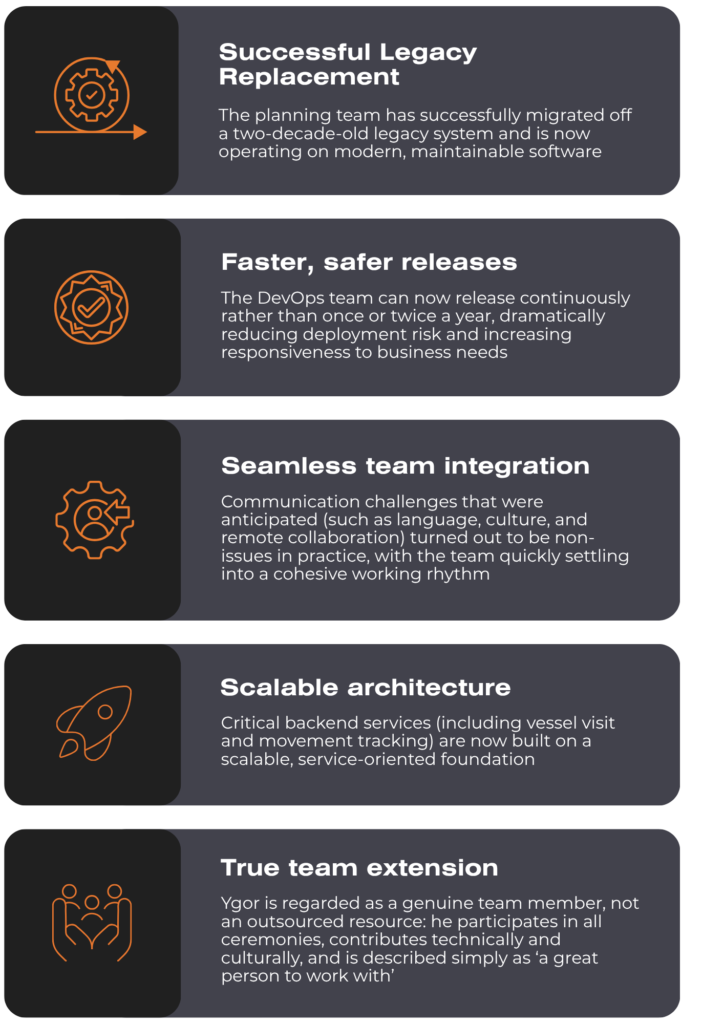
The results of the partnership go beyond a single project:
Looking Ahead
Loodswezen’s transformation journey is ongoing.
With more systems to modernise, additional business rules to automate, and operational improvements planned across multiple ports, the need for scalable, high-quality engineering remains central to the organisation’s future.
For Loodswezen, the partnership with Gapstars has proven that world-class talent can be found beyond traditional borders and that with the right collaboration model, international teams can drive meaningful, long-term impact in even the most specialised industries.
What began as an experiment in global hiring has evolved into a trusted partnership supporting one of the Netherlands’ most critical maritime operations.